From Improvement Projects to an Organisation That Improves Itself
Traditionally, organisations pursue diverse outcomes by investing in multiple standalone projects, each designed to address a specific business challenge.
But what if one well-designed Continuous Improvement programme could create value across multiple dimensions of your organisation?
This is the core philosophy behind the SCORE Programme (Sustaining Competitive and Responsible Enterprises).
Why Integrated Workplace Cooperation Matters
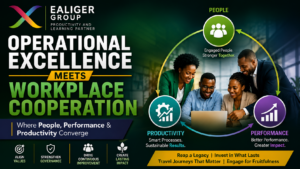
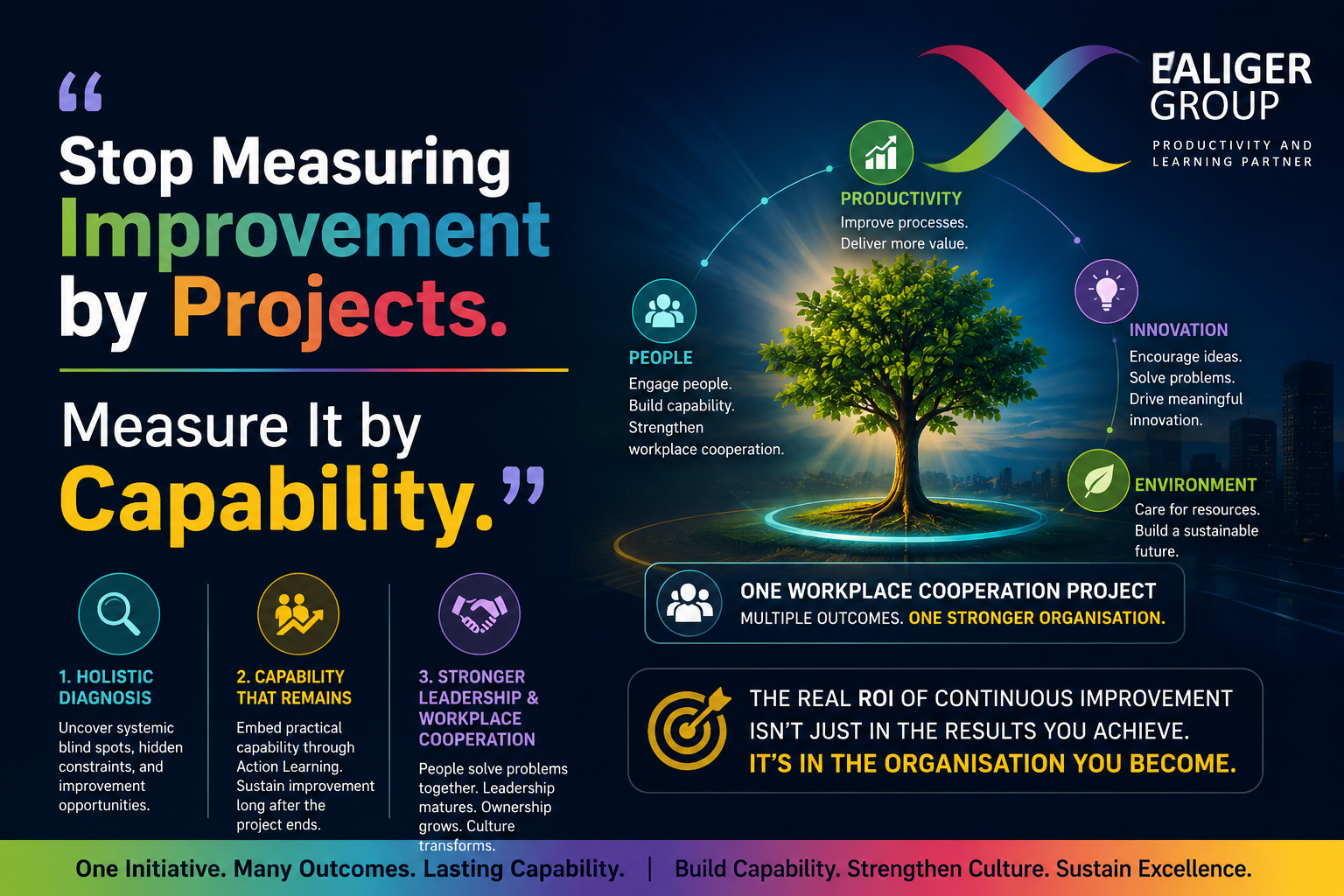
The accompanying graphic illustrates how a single workplace cooperation project generates measurable outcomes across multiple business dimensions that companies often pursue through separate, disconnected initiatives.
When productivity, people, environment, and innovation integrate within one framework, organisations achieve more than just operational performance—they build the enduring culture and capability required to sustain it.
“Continuous Improvement is not merely about delivering today’s results. It is about developing tomorrow’s capability.”
The Triple Return on Every Improvement Investment
Whenever an organisation invests in an improvement project, the return on investment (ROI) should extend far beyond financial metrics. Look for a triple return:
- Testimony: People should be able to speak about what tangibly changed in their day-to-day experience of work.
- Numbers: The organisation should be able to demonstrate clear, measurable operational improvements.
- Actual Change: Improvements must become evident in behaviours, processes, decisions, relationships, and bottom-line results.
3 Long-Term Strategic Advantages of the SCORE Methodology
While every leader expects immediate operational results, the most valuable return often lies beneath the surface. Through structured frameworks like SCORE, companies consistently gain three strategic advantages:
1. Holistic Diagnosis
The diagnostic process goes far beyond identifying surface-level problems. It uncovers systemic blind spots, hidden operational constraints, and growth opportunities that might otherwise remain unnoticed.
2. Capability That Remains (Action Learning)
Rather than creating an ongoing dependence on external consultants, the methodology uses Action Learning to embed practical problem-solving skills internally. Teams are equipped to continue driving continuous improvement long after the initial project concludes.
3. Stronger Leadership and Workplace Cooperation
When people learn to solve operational problems together, leadership matures, ownership increases, and collaboration strengthens. Over time, this daily habit of problem-solving fuels a meaningful cultural transformation.
Conclusion: Who Does Your Organisation Become?
Ultimately, the most valuable return on improvement may not be what the project physically delivers. It is who the organisation becomes because of it.
That is the definitive difference between simply completing an improvement project and building an organisation with the permanent capability to continuously improve.
👉 Want to hear directly from organisations that have experienced the journey?
Watch the videos below to explore success stories and feedback from Enterprise Improvement Teams (EIT), frontline employees, supervisors, HR managers, factory managers, and managing directors who have proudly completed their Continuous Improvement journeys.
#ContinuousImprovement #OperationalExcellence #WorkplaceCooperation #ActionLearning #Leadership #OrganisationalCulture #Productivity #SCORE #BusinessPerformance #CultureTransformation #CultureInspiredBrands #Productivity #EALIGERGroup